
Flu prevention
According to the World Health Organization (WHO), the most effective way to prevent Influenza is vaccination.1 Vaccinating around 33-73% of the population can significantly reduce outbreaks.3
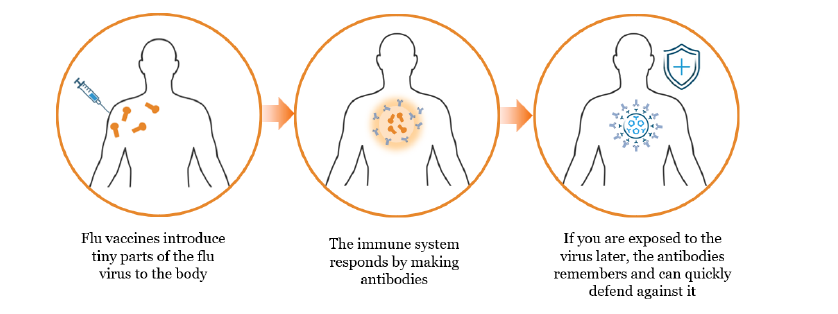
How do flu vaccines work?4
What is the difference between split vs subunit vaccine?5-7
 Sub-unit Vaccine Sub-unit Vaccine | 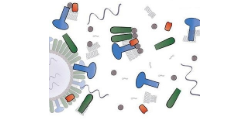 Split Vaccine | |
| Composition | Outer parts of the virus | Broken pieces of the virus including surface and internal parts |
| Post-vaccination reactions | Local and systemic reactions may occur following vaccination | Local and systemic reactions may occur, but are generally reported less often than with split vaccines |
Benefits of flu vaccine8,9

Prevents Flu
When you’re vaccinated, you’re less likely to get the flu. It also reduces the severity of illness in vaccinated people who fall sick

Once A Year
The annual flu vaccine gives you optimal protection from the current season’s active flu strains.

Reduce Hospitalization
During 2019 – 2020, the flu vaccination prevented an estimated 105,000 flu-related hospitalizations

Better Productivity
Influenza is associated with workplace productivity loss. A typical employee could lose ~3.5 workdays following influenza infection
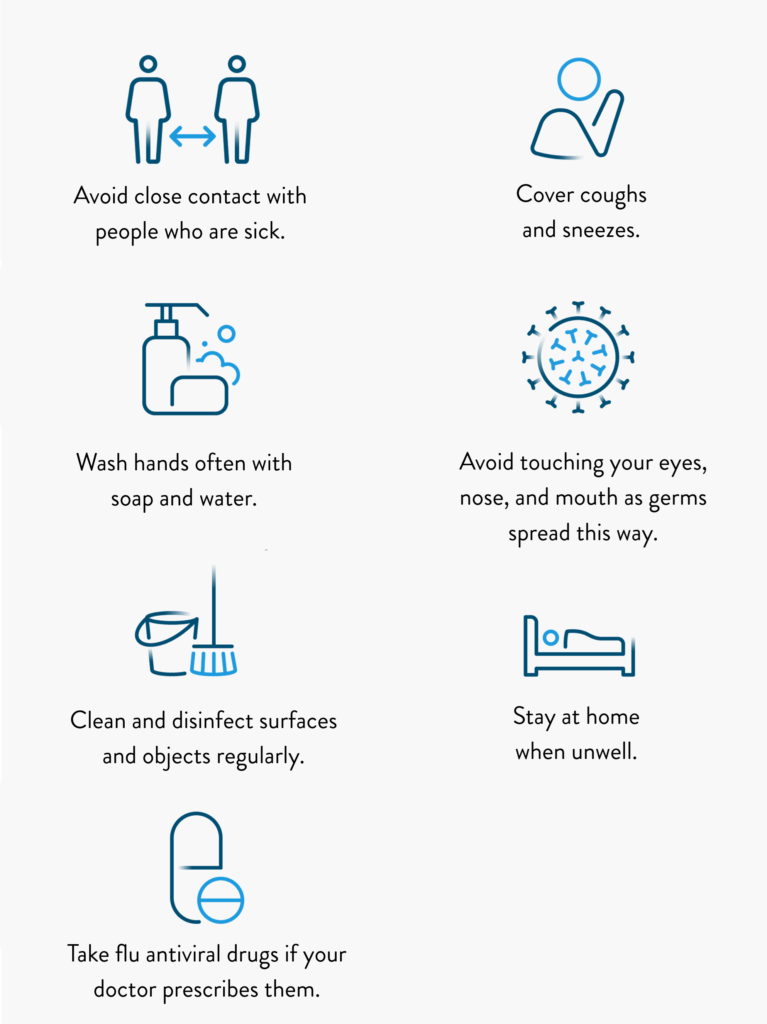
Daily Preventative Actions to Stop the Spread of Virus 8
Who Should Get Vaccinated?1,10
Annual influenza vaccination is indicated for individuals aged 6 months and above to help reduce the risk of influenza infect ion and transmission.
Vaccination is especially important for people in high -risk groups, as they are more likely to experience severe illness and flu-related complications.

Pregnant women

Children 6 months – 5 years

Elderly aged ≥ 65 years

Individual with chronic medical conditions such as asthma, diabetes, heart disease, chronic lung disease