

What is the flu?
Influenza (flu) is a contagious respiratory illness caused by influenza viruses that infect the nose, throat, and lungs. It can cause mild to severe illness, and at times can lead to death.1
There are 4 types of influenza viruses, types A, B, C and D. Influenza A and B viruses circulate and cause seasonal epidemics.2
| Influenza A Influenza B | Circulate and cause seasonal epidemics in humans |
| Influenza C | Rare and usually cause mild infections |
| Influenza D | Primarily affects cattle and not known to infect humans |
Flu Symptoms
Symptoms 3 of influenza begin around 2 days after being infected by someone who has the virus.3
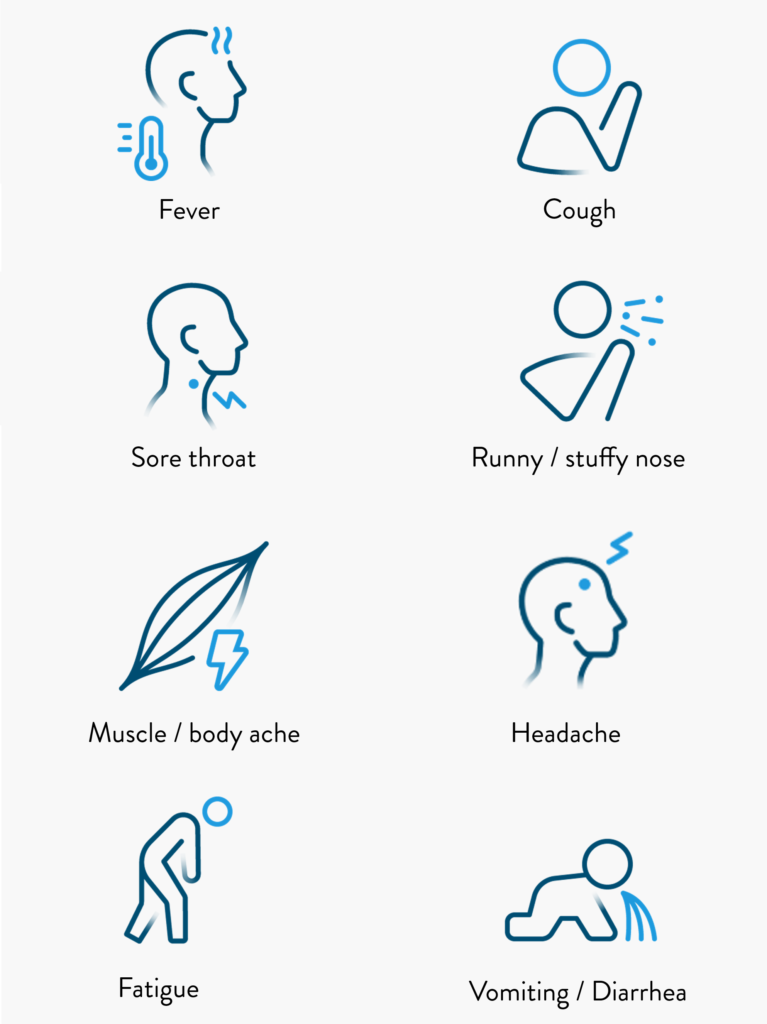
Complications from the flu can be more serious.
While most people recover in a few days, some may develop complications that can be life-threatening.3 Common serious complications include:
- Pneumonia
- Myocarditis
- Extreme inflammatory response in the body
The flu can worsen existing chronic conditions. For example, people with asthma may experience asthma attacks during flu infection.
Did you know that people with flu are most contagious during the first 3 days of their illness?5
How does the Flu Spread?5

Flu viruses primarily spread through respiratory droplets that are released into the air when an infected individual coughs, sneezes, or speaks. These droplets can travel a short distance and may land in the mouths or noses of people who are nearby, allowing the virus to enter their bodies.
In addition to direct droplet transmission, flu infection can also occur through contact with contaminated surfaces. When a person touches a surface or object that carries the flu virus and subsequently touches their mouth, nose, or eyes, the virus can be transferred and lead to infection.4